
Not everyone pulling into Casper this fall is here to hunt. A lot of the rigs arriving in September and October belong to people coming to work — energy-sector crews, contractors, traveling nurses, and remote professionals who live in their RVs full-time and are setting up a base for the season. If that’s you, the question isn’t which hunt unit to draw. It’s how to turn a campsite into a home you can actually live and work out of for a month or more. A monthly RV park in Casper with full hookups is the difference between settling in and just surviving the stay.
Here’s how to set up a long stay so the rig feels like home, your work doesn’t skip a beat, and Wyoming’s fall weather doesn’t catch you off guard.

Full Hookups Aren’t a Luxury for a Long Stay
For a weekend, you can get by on tanks and a battery. For a month of full-time living while you’re working every day, full hookups are no longer optional. Continuous 30/50-amp power means you run your climate control, your work setup, and a full kitchen without babysitting anything. A permanent sewer connection means no dumping runs squeezed around your shift. City water means you’re not hauling and refilling. These sound like small things until you’re doing them at 6 a.m. before a twelve-hour day — and then they’re everything.
The other quiet advantage of a monthly site is cost and stability. Monthly rates are dramatically better than nightly rates; you’re not repacking and moving every few days, and you have a fixed address and a stable base while you’re in the area. If you’re weighing a long stay, the simplest move is to ask Rone’s RV Park about monthly rates for your dates and rig size — extended stays are where a full-hookup park earns its keep.
Set Up Your Rig to Work, Not Just Sleep
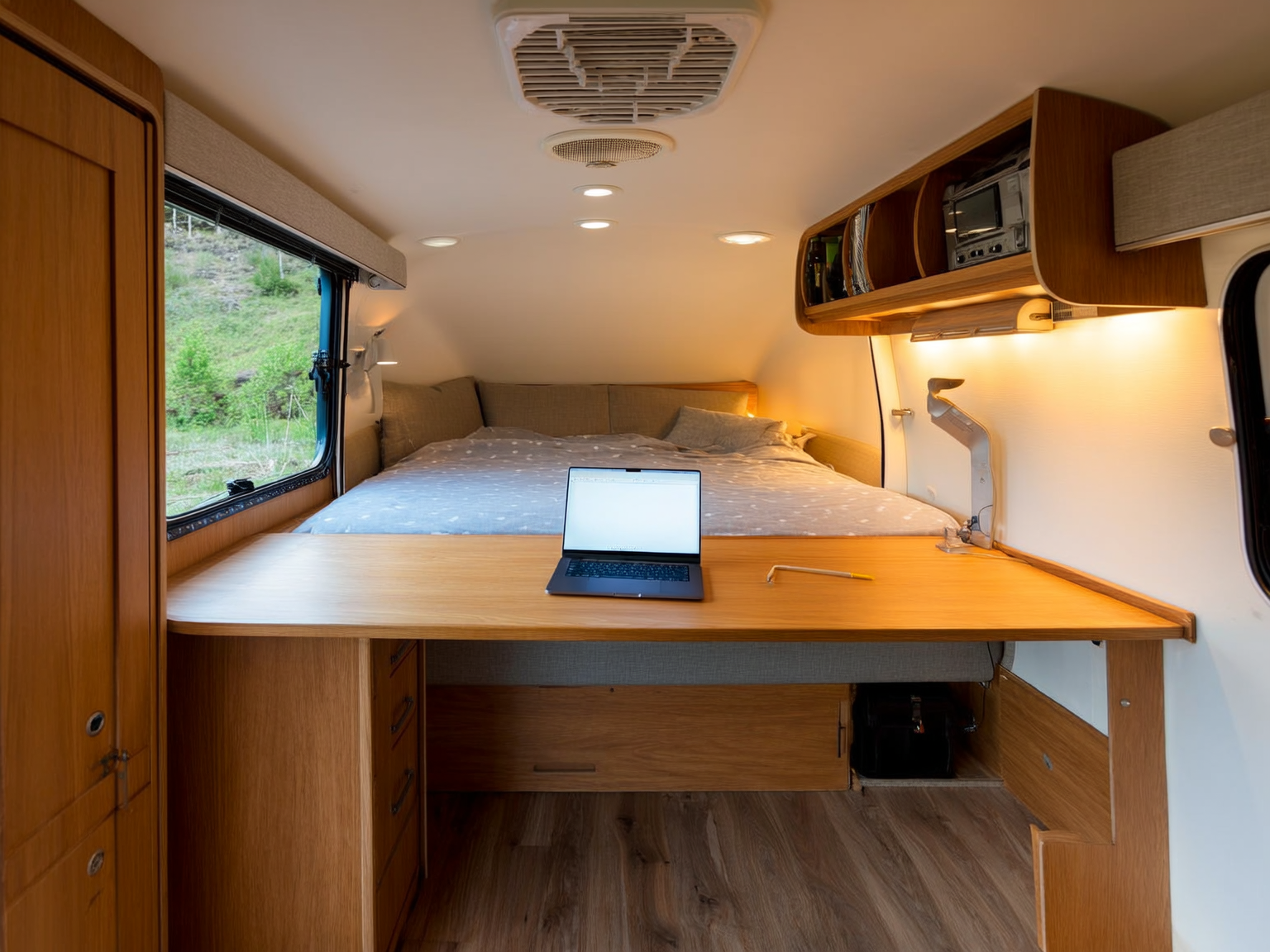
If you’re a remote worker or you need to stay reachable for your job, connectivity is the first thing to solve. Have a plan for internet before you arrive — a cell booster, a hotspot on a reliable carrier, or a satellite option — and know that a stable, powered site makes all of it work better than a remote pullout ever will. A dedicated corner of the rig, set up as a real workspace with power and light where you need them, keeps work from taking over your living space.
Storage is the other piece long-stay workers underestimate. Living in a rig for a month or a season means gear, tools, seasonal clothing, and equipment you need nearby but not underfoot. Rone’s RV Park has on-site storage units right at the park, so work tools and bulky gear can live behind a locked door instead of crowding the rig. Keeping your living space livable is a big part of avoiding burnout in RV life during a long stay.
Get Ahead of Wyoming’s Fall Weather
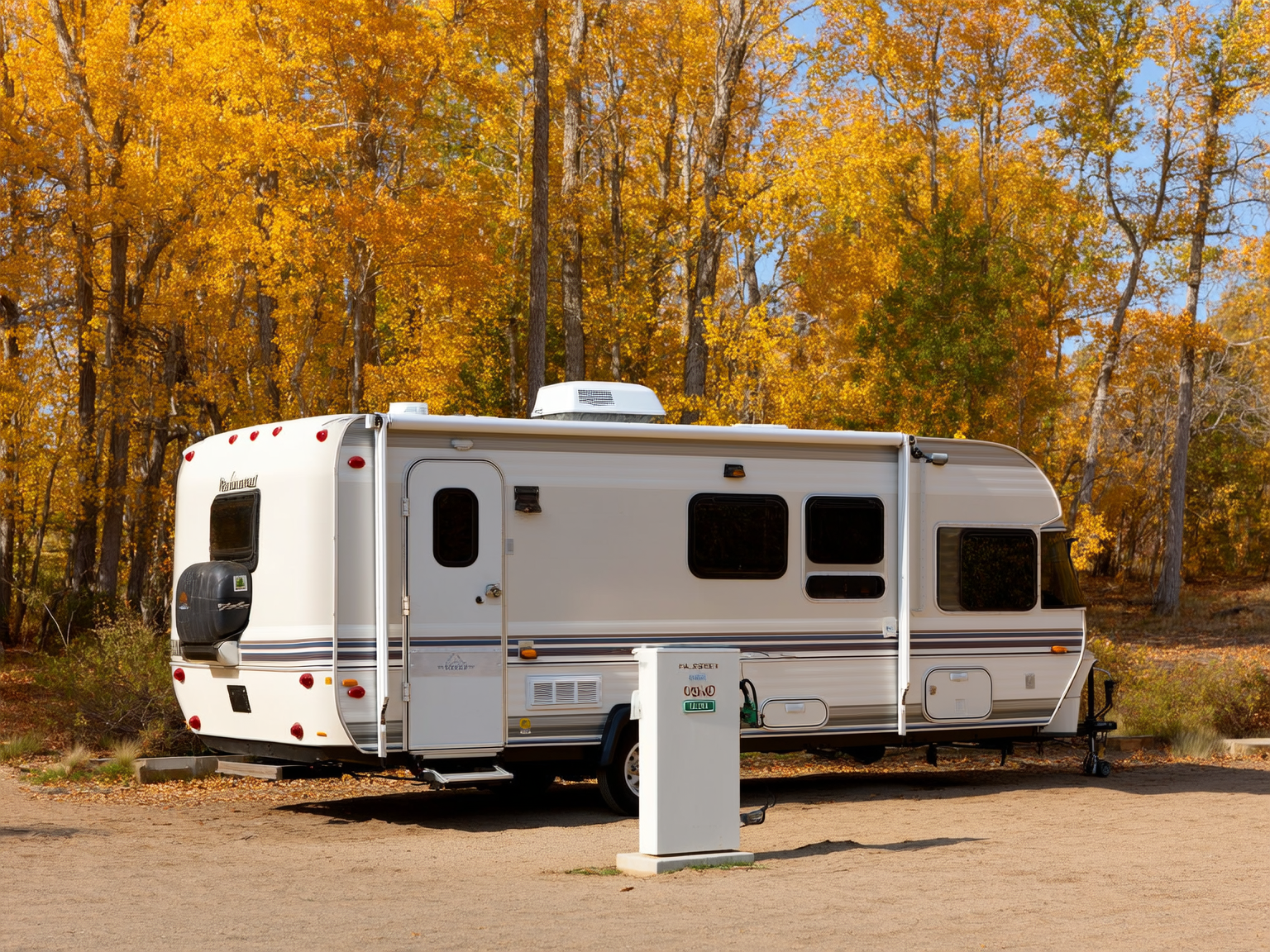
Casper sits at 5,100 feet, and the fall temperature swing is what surprises people most. Through September and October, afternoons can stay warm while overnight lows drop into the 40s and 30s — and the first hard freeze isn’t far behind. For someone living in an RV full-time through the season, that’s not a one-off; it’s your daily reality, and it hits your comfort, your water lines, and your power draw.
Get the rig ready before the cold arrives, not after your first frozen morning. Our checklist for getting your RV ready for Wyoming’s first cold nights walks through furnace checks, condensation control, and protecting your water line — and, with full hookups, you can run the furnace off shore power without draining a battery, which matters a lot when the season turns. If you’re staying into deep winter, this is where a stable, serviced site really separates itself from roughing it.
Casper Is an Easy Place to Actually Live
Part of what makes Casper work as a long-stay base is that it’s a real, full-service town, not a remote outpost. You’ve got hospitals, hardware stores, groceries, and everything a working RVer needs within an easy drive — no two-hour supply runs. And when you’ve got a day off, the outdoor recreation that draws everyone else here is right on your doorstep.
The North Platte River runs through town, Casper Mountain is fifteen minutes up the road, and there’s genuinely good hiking, fishing, and scenery close by — Visit Casper lays out the options, and the local events calendar is worth checking for something to do on a weekend off. If you want to plan longer weekend trips, Travel Wyoming and the BLM Casper Field Office cover the wider region and the surrounding public lands. Living in Casper for work doesn’t mean putting your life on hold — it just means having a comfortable base to come home to.
Frequently Asked Questions
Does Rone’s RV Park offer monthly rates for long-term stays?
Yes — monthly and extended-stay rates are the best value for workers and full-time RVers settling in for the season. Contact Rone’s RV Park with your dates and rig size for a quote.
Can I work remotely from an RV park in Casper?
You can, with a solid connectivity plan. A stable, powered full-hookup site plus a cell booster or reliable hotspot lets remote workers stay online, and a dedicated workspace in the rig keeps work separate from living space.
How cold does Casper get in fall and winter for RV living?
Overnight lows drop into the 40s and 30s through September and October, with hard freezes and deep cold arriving into winter. Full-time RVers should get their rig cold-ready early and run the furnace off shore power at a full-hookup site.
Is there storage available for work gear and tools at the park?
Yes. Rone’s RV Park offers on-site storage units, so tools, equipment, and seasonal gear can be locked away off-site of your living space — a big help for keeping a rig livable over a long stay.
Make Casper Your Basecamp This Season
If you’re moving to Casper for fall or winter work and living in your RV, a stable monthly site is the foundation on which everything else rests. Rone’s RV Park in Casper gives traveling workers and full-time RVers full hookups, on-site storage, and a comfortable, serviced base close to town. Ask about monthly rates and set up your season right.