
Wyoming’s first snow of the season rarely waits for the calendar. A warm, dry October afternoon can turn into a slick, wind-driven drive by evening, and if you’re towing an RV into Casper for hunting season, fall work, or a late-season stay, that transition catches a lot of travelers off guard. The good news: early-season snow is very manageable when you plan the route, prep the rig, and drive for the conditions. Here’s how to get into Casper safely when the first storm rolls through.
Know What Wyoming Fall Weather Actually Does

Central Wyoming sits high and open, and that combination makes fall weather swing hard and fast. You can leave a sunny valley and climb into snow at elevation within an hour. Even when the forecast leans warm and dry, an early cold front can drop a quick band of snow across I-25 and the surrounding highways, then move on just as fast. The roads that stay tricky longest are the exposed, wind-scoured stretches where blowing snow cuts visibility even after the storm passes.
The single most important habit for fall RV travel here is checking conditions before and during your drive. Wyoming 511 (WYDOT) gives you live road conditions, closures, and camera feeds across the state, and the Wyoming Department of Transportation posts advisories when wind and snow make towing dangerous. Check both before you leave and at every fuel stop.
Prep the Rig Before the First Storm
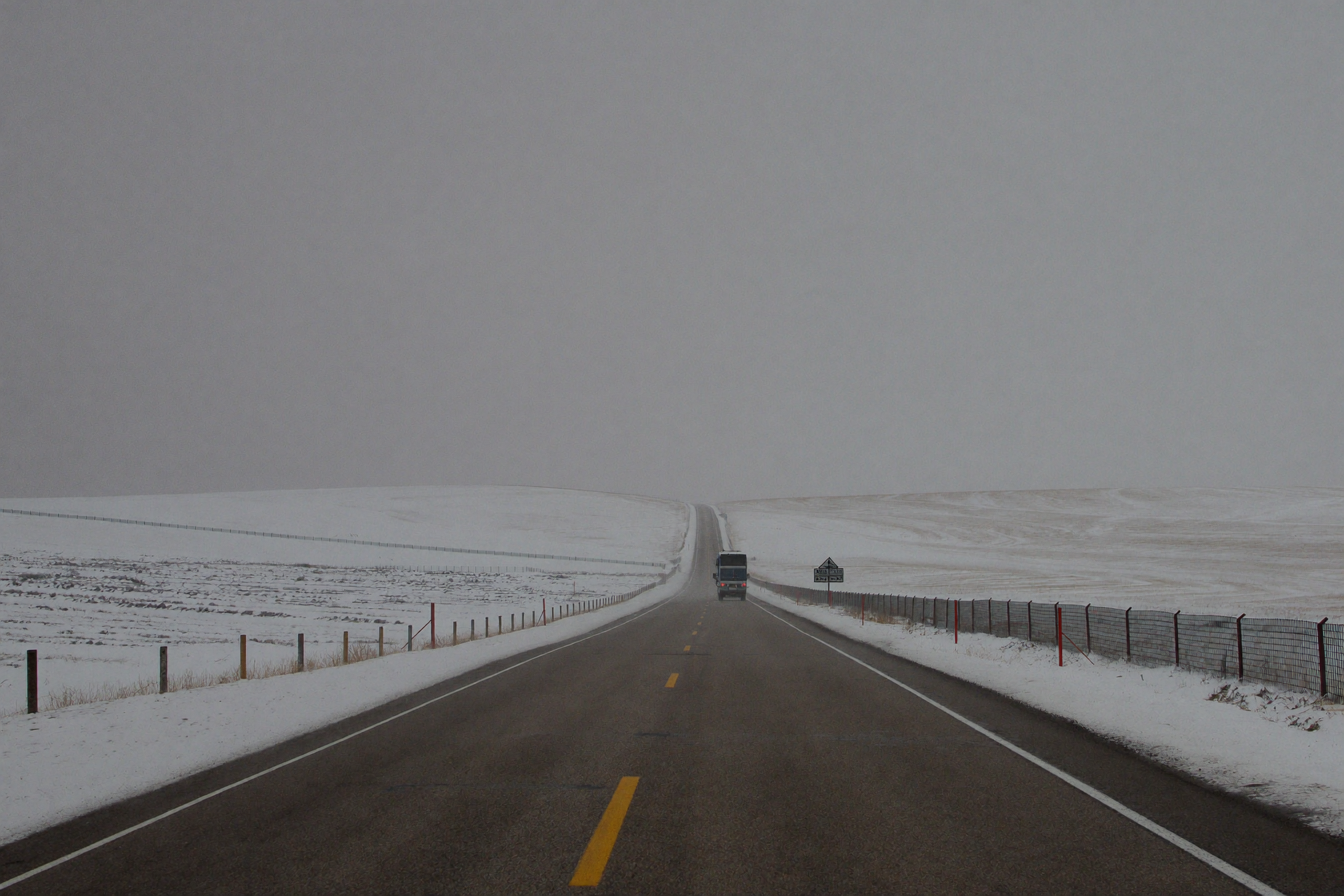
Early-season snow is far less stressful when your RV and tow vehicle are ready before you ever hit slick pavement. Run through this the day before you travel:
- Tires and pressure. Cold mornings drop tire pressure noticeably at altitude, and underinflated tires handle badly on snow. Check pressure on both the rig and tow vehicle when they’re cold, and inspect tread — worn tires and winter roads don’t mix.
- Brakes and trailer connection. Confirm your brake controller is set correctly and your trailer brakes are working. Stopping distances stretch dramatically on wet or icy roads.
- Wipers, washer fluid, and lights. Swap in fresh wipers, top off winter-rated washer fluid, and make sure every marker and brake light is clean and working so you’re visible in low light and blowing snow.
- Emergency kit. Pack traction aids, a shovel, warm layers, water, food, and a fully charged phone. If a storm closes the highway, you want to be self-sufficient for a few hours.
- Fuel and propane. Roll in with a full tank and topped-off propane. Stations can be far apart on Wyoming’s open highways, and cold weather burns through both faster than you expect — running low in a storm turns a delay into an emergency.
It’s also worth walking the rig before you pull out: confirm nothing is loose on the roof or exterior that wind can catch, that your storage bays are latched, and that anything heavy inside is secured low. A tall RV in a Wyoming crosswind punishes anything that shifts, and the last thing you want on a slick highway is cargo sliding as you brake.
Drive for the Conditions, Not the Schedule
Towing on early snow is mostly about slowing everything down and giving yourself room. A few rules keep an RV upright and under control:
- Cut your speed early. Slow before you reach a slick stretch, not on top of it. High profile RVs catch wind and lose traction faster than passenger cars.
- Leave big following distances. Double or triple your normal gap. A loaded rig needs far more room to stop on snow.
- Skip cruise control. On any surface that might be slick, control the throttle yourself so you can react instantly to a slip.
- Be smooth. Gentle inputs on the wheel, brakes, and gas. Sudden moves are what jackknife trailers.
- Respect the wind. Wyoming crosswinds shove a tall RV around, and blowing snow hides ice. If WYDOT posts a wind or “no light trailers” advisory, take it seriously.
And know when not to drive at all. If the highway is posted as closed to light trailers or high-profile vehicles, wait it out. Wyoming storms usually move through quickly, and a few hours in a safe spot beats a wreck or a slide-off on a remote stretch of I-25.
Time Your Arrival Into Casper
Whenever you can, arrange your drive so you’re pulling into Casper in daylight and before the worst of a front, not after dark in the middle of it. Setting up a rig in blowing snow and fading light is miserable and easy to get wrong. Arriving early gives you time to level, hook up, and settle in before conditions turn.
If you’re new to the area, Visit Casper is a helpful reference for getting oriented to the town, services, and seasonal conditions before you arrive. This is one of the quiet advantages of a full-hookup basecamp near town. When you arrive at a maintained park with plowed access and ready hookups, the hard part of your day ends the moment you park. You’re not searching for a spot in a storm or fighting frozen equipment in the dark — you’re plugged in, warm, and done. For a sense of the area and what’s nearby once you’re settled, our things to do page is a good place to start, and you’ll find more seasonal travel guides on the Rone’s RV Park blog.
Why a Casper Basecamp Takes the Stress Out of Early Snow
The whole point of a stable home base is that it turns unpredictable Wyoming weather into a non-event. Plowed, maintained roads mean you can get in and out. Full hookups mean reliable heat and water as soon as you arrive. Proximity to town means fuel, supplies, and services are minutes away if a storm changes your plans. And a level, ready site means setup takes minutes, even when the weather isn’t cooperating.
If you’re heading into Casper this fall for a hunt, seasonal work, or a late-season stay, plan the drive around the weather and give yourself a soft landing at the end of it. Contact Rone’s RV Park to reserve a full-hookup site so your basecamp is ready and waiting, whatever the sky is doing when you roll into town.
Frequently Asked Questions
When does it start snowing in Casper?
Casper can see its first snow anytime from late September into October, though timing varies year to year and some falls stay warm and dry well into the month. Even in a mild year, a fast-moving cold front can drop a quick band of snow across the region, so fall RV travelers should always check conditions before driving.
How do I check Wyoming road conditions before towing?
Use Wyoming 511 (WYDOT) for live road conditions, closures, and highway cameras, and check the Wyoming Department of Transportation for wind and snow advisories. Check both before you leave and again at fuel stops, since conditions across Wyoming’s open highways can change quickly.
Is it safe to tow an RV in early-season snow?
It can be, with the right prep and driving. Slow down well before slick stretches, leave much larger following distances, avoid cruise control, keep your inputs smooth, and respect wind advisories. If the highway is closed to light trailers or high-profile vehicles, wait it out — Wyoming storms usually pass quickly.
Should I arrive in Casper before or after a storm?
Aim to arrive in daylight and ahead of the worst of a front, not after dark in the middle of it. Arriving early gives you time to level, hook up, and settle in before conditions deteriorate. A full-hookup park with plowed access makes that arrival easy no matter the weather.
Traveling into Casper this fall? Rone’s RV Park gives you plowed access, full hookups, and a ready site minutes from town — a stress-free landing even when the first snow flies. Contact us to reserve your spot.