
Should You Use Cruise Control While Towing in Wyoming?
In most cases, you should be very cautious about using cruise control while towing in Wyoming, and many RVers are better off leaving it off when winds are strong, traffic is changing, grades are rolling, or road conditions are uncertain. Wyoming highways look wide open, but that does not mean they are low-risk. Long stretches of Interstate 25, gusty crosswinds, sudden weather shifts, and elevation changes can turn a relaxed towing setup into a white-knuckle drive fast.
That does not mean cruise control is always wrong. On a calm, dry, lightly traveled stretch of highway with a properly matched tow vehicle and trailer, it can reduce fatigue and help maintain a steady speed. The key is understanding when cruise control is helping you and when it is taking away the small corrections that keep a rig stable in Wyoming conditions.
If you are towing through central Wyoming and planning to stop in Casper, this guide will help you decide when cruise control makes sense, when to turn it off, and how to build a safer towing routine before you arrive at Rone’s RV Park.
Why Wyoming Changes the Cruise Control Question
Towing advice online often sounds generic because it is written for flat interstates, moderate weather, and ideal conditions. Wyoming is different. The state is famous for wind, weather exposure, and long highway stretches where minor handling issues can escalate before you have much time to react.
Crosswinds are one of the biggest reasons cruise control can become a problem. When a trailer gets pushed sideways by a gust, you need to feel the movement early and make smooth steering and throttle corrections. Cruise control can delay that instinctive response because the truck is trying to maintain a set speed rather than letting you naturally ease off the accelerator as conditions change.
Wyoming also has stretches of rolling terrain that may not look dramatic but still affect towing stability. A tow vehicle using cruise control may accelerate more aggressively than you would choose on a climb, or stay in gear too long before downshifting. During descents, some systems can feel unpredictable if you rely on them rather than actively managing speed and trailer behavior.
The Wyoming Department of Transportation regularly posts road and travel information because conditions can change quickly, even outside of winter. That matters for RVers. A road that feels easy at noon can become stressful later in the day if the wind builds or the weather moves in.
When Cruise Control Can Work While Towing
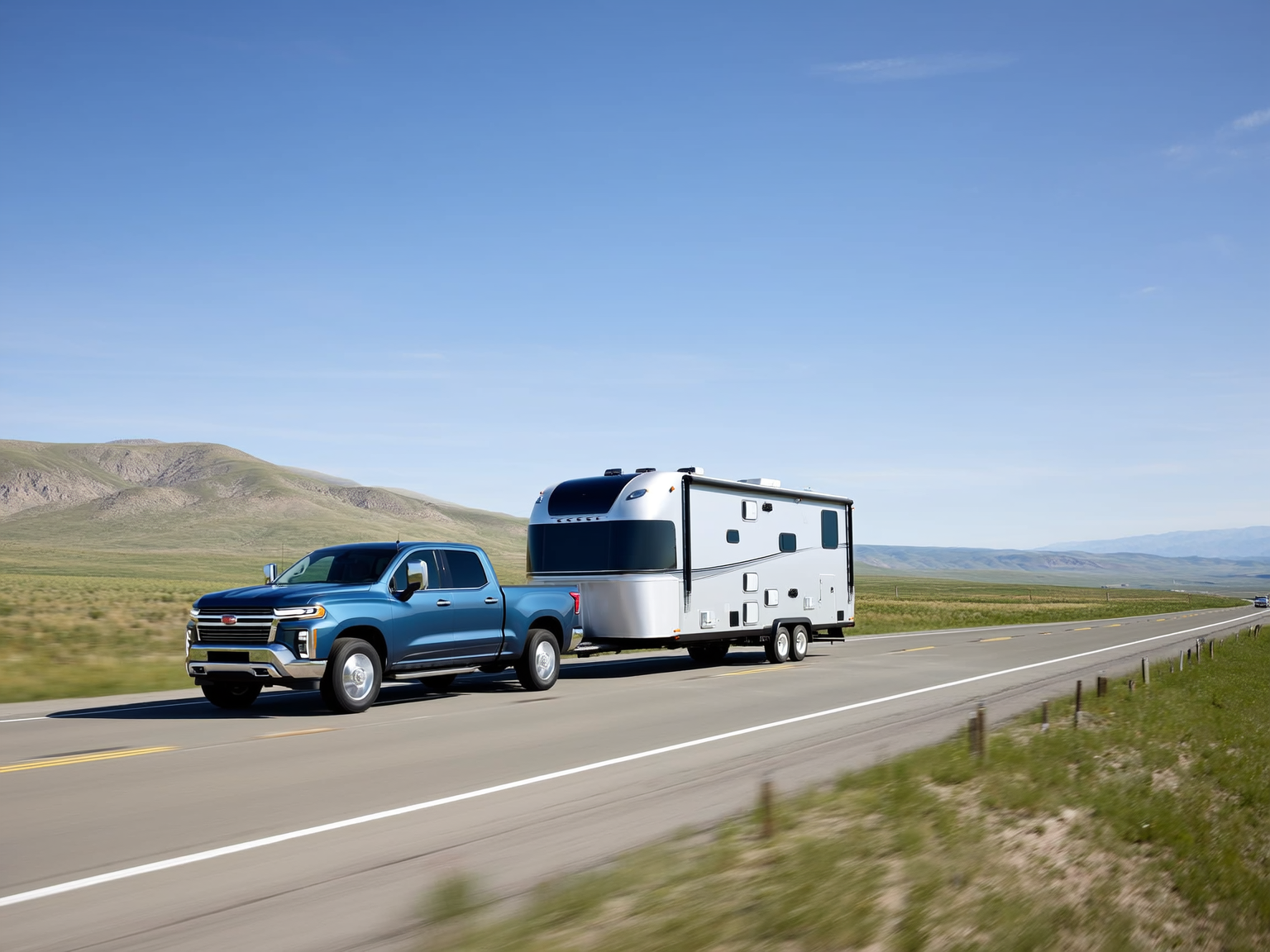
There are situations where cruise control can be reasonable, especially for experienced drivers with well-balanced setups. If all of the following are true, cruise control may be useful for short stretches:
- The road is dry, and visibility is clear
- Winds are light and steady, not gusting
- Traffic is light enough that you are not constantly adjusting speed
- Your tow vehicle and trailer are correctly matched
- Your trailer brake controller is dialed in
- You are on a relatively straight road without frequent grade changes
In those moments, cruise control can reduce leg fatigue and help prevent speed creep. That matters in Wyoming, where long open roads can make drivers accidentally drift faster than intended. A steady speed also supports tire safety, fuel efficiency, and calmer trailer behavior when conditions are genuinely stable.
Still, even in ideal conditions, cruise control is not a set-it-and-forget-it system. You should stay alert, keep both hands ready, and disengage it the moment the road, weather, or traffic starts asking more from you.
When You Should Turn Cruise Control Off Immediately
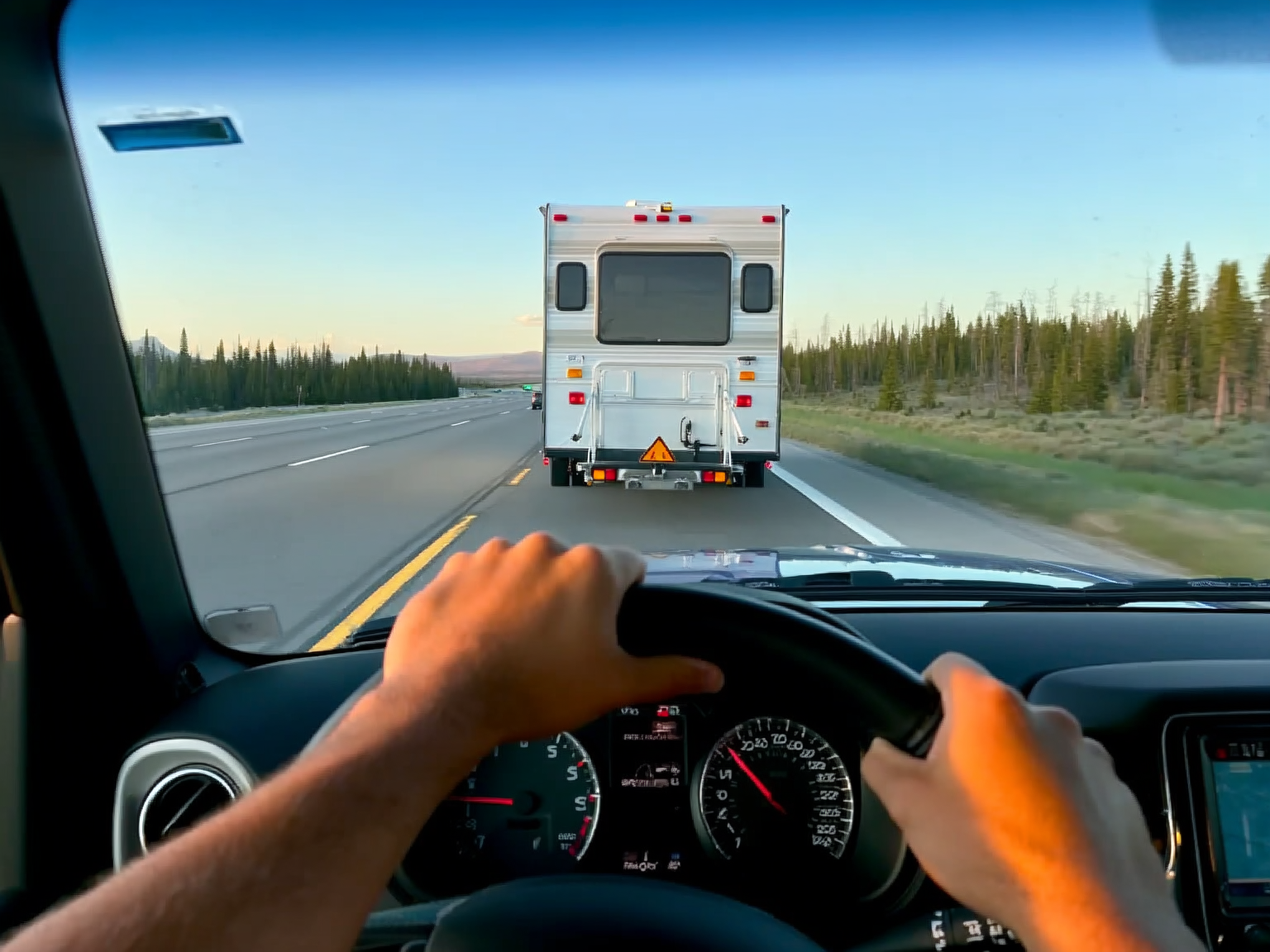
1. Gusty Crosswinds
If the wind is pushing your trailer around, cruise control should be off. Wyoming gusts can hit hard and without much warning, especially on exposed roads. You want full manual control of the throttle so you can smoothly reduce speed and stabilize the rig.
2. Heavy Traffic or Passing Trucks
Large trucks can create push-pull air effects that upset a trailer. Cruise control does not read that context the way you do. If you are being passed often, changing lanes, or managing variable traffic speed, manual control is safer.
3. Descents and Rolling Grades
When the road starts changing elevation, active speed management matters more than convenience. Use tow/haul mode, engine braking where available, and your own judgment. Do not count on cruise control to manage downhill momentum the way a towing driver should.
4. Rain, Snow, Ice, or Mixed Conditions
The answer here is simple: turn it off. Reduced traction and changing surfaces demand full attention and manual response. Wyoming weather can shift quickly, and even a brief slick stretch is enough reason to disengage cruise control.
5. Construction Zones, Rough Pavement, or Narrow Shoulders
Cruise control makes less sense anywhere precision matters more than comfort. Uneven pavement, lane shifts, and tight work zones all call for active driving.
The Hidden Risk, Speed Masks Sway Until It Gets Worse
One reason some drivers like cruise control while towing is that it feels calm right up until it does not. That is exactly the risk. A trailer can begin developing sway in subtle ways, especially when wind and road grooves combine. If your vehicle is still trying to maintain speed, you may notice the problem later than you would if your foot were naturally responding to the rig’s behavior.
That does not mean cruise control causes every sway event. Usually, sway starts with loading issues, excessive speed, poor weight distribution, underinflated tires, or weather. But once instability begins, you want to be fully engaged. Manual throttle control gives you a better feel for what is happening underneath you.
Before any Wyoming towing day, inspect your tires, confirm your hitch setup, and make sure cargo is balanced. If you need a pre-trip reset point in Casper, contact Rone’s RV Park for a convenient full-hookup stop to regroup before the next leg.
A Smarter Towing Routine for Wyoming Highways
Instead of asking whether cruise control is always good or always bad, it is better to build a decision-making routine.
Check conditions before you roll
Review forecasts, wind conditions, and road reports. Even in spring and summer, Wyoming weather deserves respect. Wyoming Tourism is useful for trip planning, while WYDOT is the better source for real-time road context.
Choose a conservative speed
Many towing problems start because drivers are simply moving too fast for conditions. A lower, steadier speed often matters more than whether cruise control is on. If winds are up, slowing down early is one of the best safety moves you can make.
Use tow/haul mode properly
Tow/haul mode helps with transmission behavior and downhill control. It is not a substitute for attention, but it supports more stable towing than letting the vehicle hunt for gears.
Stop before fatigue changes your judgment
Long Wyoming drives can be deceptively tiring. Wide-open space creates mental fatigue, and wind adds physical strain. Stopping in Casper gives you a practical break point. You can stay at Rone’s RV Park in Casper and continue the next day with a clearer head and a calmer setup.
How Trailer Type Affects the Decision
Not every rig reacts the same way.
Travel trailers are usually more sensitive to wind, especially taller units with broad sidewalls. Fifth wheels often feel more stable, but that does not make them immune to wind or downhill speed issues. Toy haulers, cargo-heavy trailers, and rigs with questionable weight distribution can all behave differently than expected.
If your trailer already feels busy in mild wind, that is useful information. You do not need online permission to turn cruise control off. Wyoming rewards conservative drivers, not drivers trying to prove their setup can handle more than it should.
What About Adaptive Cruise Control?
Some newer trucks have adaptive cruise control and towing-assist features. These can help with spacing and reduce fatigue, but they still do not replace judgment. Sensors cannot fully interpret wind gusts, trailer sway, rough pavement, or the feel of a trailer beginning to move wrong behind you.
Treat adaptive systems as support, not authority. If road behavior feels off, take over early.
Practical Rule of Thumb for RVers Passing Through Casper
If the day is calm, dry, and predictable, cruise control may be fine for limited stretches. If you are asking yourself whether conditions are too windy, too busy, or too uneven, that is your answer. Turn it off.
The safest Wyoming towing mindset is simple:
- Stay slower than your ego wants
- Stay more alert than the road seems to require
- Stay flexible when conditions change
- Stop before a tiring day becomes a risky one
That mindset usually leads to a better trip anyway.
FAQ: Cruise Control While Towing in Wyoming
Is it illegal to use cruise control while towing in Wyoming?
No, but legality is not the same as safety. The better question is whether the current road, wind, and traffic conditions support it.
Does cruise control help with fuel economy while towing?
Sometimes on calm, flat highway stretches, yes. In rolling terrain or wind, the manual throttle may actually feel smoother and more appropriate.
Should I use cruise control on I-25 in Wyoming while towing?
Only if conditions are calm and consistent. If the wind picks up, traffic thickens, or grades begin to change, turn it off.
Where should I stop in Casper during a Wyoming towing trip?
A full-hookup stop can make the next day safer and easier. Explore activities near our park if you want to turn a necessary stop into a more enjoyable overnight reset.
Final Take
Cruise control while towing in Wyoming is not automatically unsafe, but it is often overused in conditions that demand more driver involvement. If you want the short answer, here it is: use it sparingly, only in calm conditions, and turn it off sooner than you think you need to.
Planning your Wyoming RV adventure? Rone’s RV Park in Casper offers spacious pull-through sites, full hookups, and an easy place to pause, inspect your rig, and head back out with less stress.