
RV Roadside Emergency Kit Checklist for Wyoming Travelers
An RV roadside emergency kit for Wyoming travel should include safety gear, tire and battery basics, water, weather layers, lighting, communication backups, and a few practical repair supplies you can reach quickly. Wyoming highways can be beautiful, but they also come with long distances, wind, fast weather changes, and stretches where help does not arrive instantly.
That is why a real emergency kit is not about fear. It is about reducing delay, risk, and chaos when something goes wrong. Whether you are passing through for a regional trip or using Casper as your base, the goal is simple: protect yourself, stabilize the situation, and wait safely if you need help.
If you are planning routes through central Wyoming, stay at Rone’s RV Park in Casper so you can check your rig, restock supplies, and head back out from a dependable full-hookup stop.
Why Wyoming Requires a Better Emergency Kit Than a Basic Weekend Setup

Many generic packing lists assume you are driving through dense areas with plenty of services nearby. Wyoming is different. You may face:
- Long highway gaps between towns
- Strong crosswinds
- Rapid afternoon weather shifts
- Sparse shade and dry conditions
- Limited cell service in some areas
A minor problem in a busy metro area might be an inconvenience. In Wyoming, that same problem can become a long roadside wait. That is why your kit should support self-sufficiency for several hours, not just a quick glance at the tires.
The Must-Have Safety Items
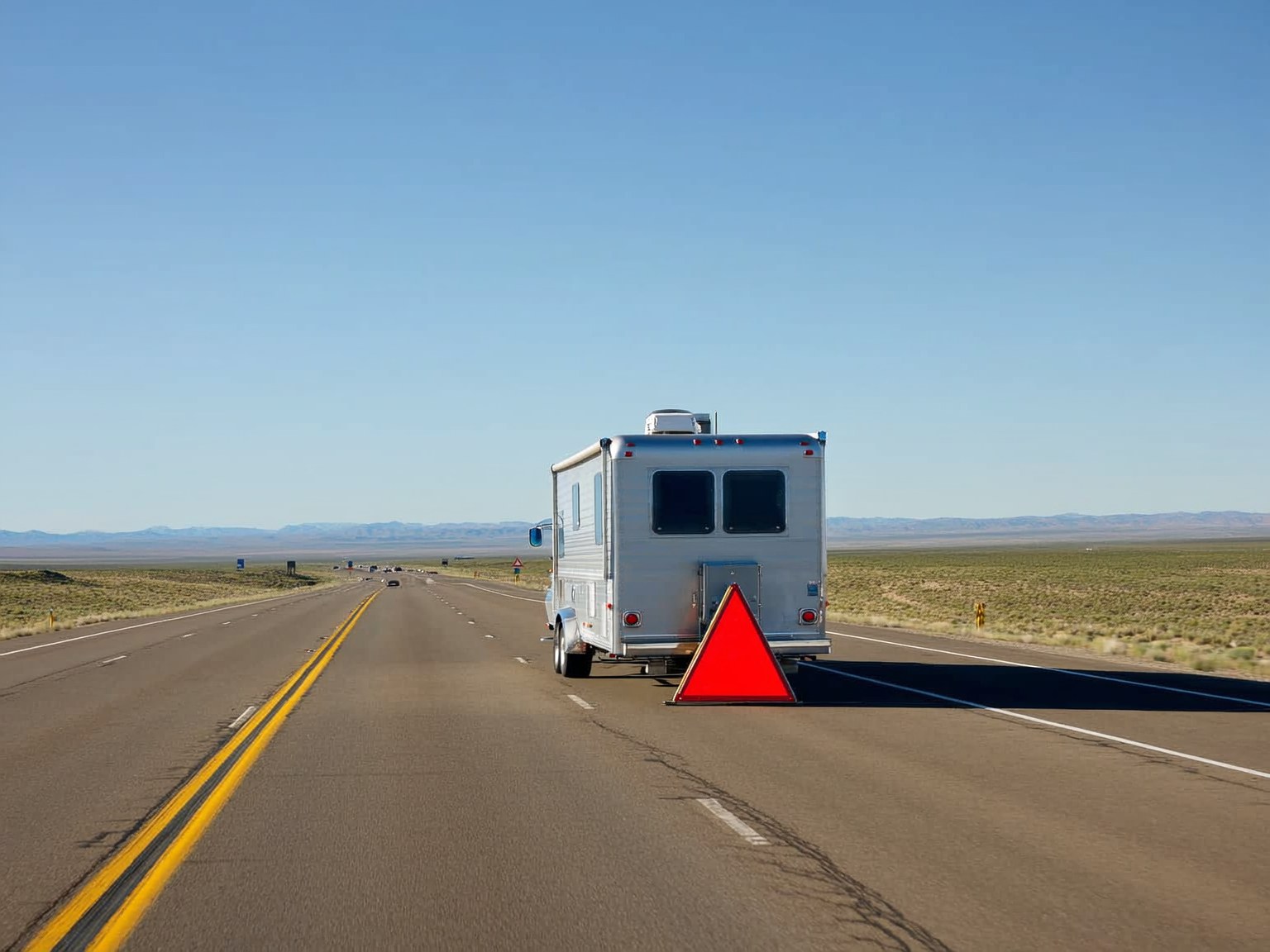
Start with the items that protect you and make your rig easier to see.
Every RV roadside emergency kit should include:
- Reflective triangles or roadside flares approved for highway use
- A bright flashlight or headlamp with extra batteries
- A high-visibility vest
- Work gloves
- A basic first-aid kit
- A charged power bank and vehicle charging cables
If you break down near dusk or during bad weather, visibility matters first. Make yourself visible, stay calm, and create a safer scene before you worry about solving the mechanical issue.
Tire Trouble Supplies You Will Actually Use
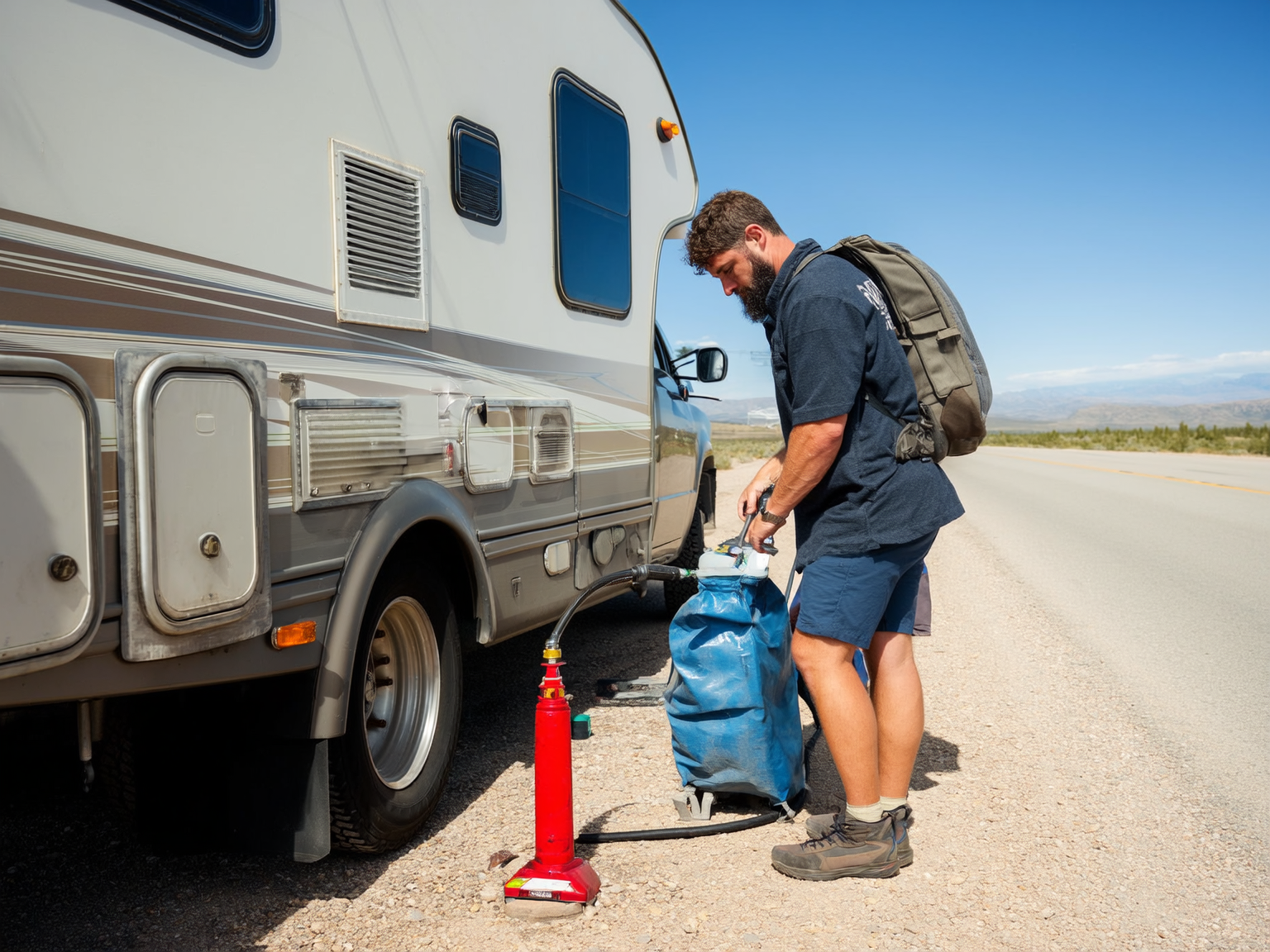
Tire issues remain one of the most common RV travel problems, especially on long summer drives. Your kit should help you inspect, stabilize, or safely wait for help.
Include:
1. A tire pressure gauge
2. An air compressor sized for RV use if your setup allows it
3. Wheel chocks
4. A lug wrench or the tools required for your rig
5. A torque wrench if you handle your own wheel checks
6. A tire repair option for appropriate smaller support vehicles, if relevant
This is also a reminder to know your actual equipment. A tool is not helpful if it does not fit your lug nuts or if you cannot access the spare.
Battery and Electrical Basics
Battery trouble can strand RVers in ways that feel confusing at first. You may have lights but no start. Or your tow vehicle is fine, but house systems are failing.
Pack these basics:
- Jumper cables or a jump starter rated for your vehicle
- Spare fuses for both the RV and tow vehicle, where appropriate
- A multimeter, if you know how to use one
- Printed notes on battery type and replacement specs
If you are staying in Casper for a while, a stable park is a good place to test and organize all of this before a longer route. Contact Rone’s RV Park if you need a practical stop to get your setup squared away.
Water, Food, and Comfort Matter More Than People Expect
Roadside emergencies are not always dangerous, but they are often uncomfortable. If you are stuck for several hours in wind, sun, or heat, simple comfort supplies become safety supplies.
Keep these in the rig:
- Bottled water or a rotated emergency water storage
- Shelf-stable snacks
- Hats and sun protection
- Lightweight layers plus one warmer backup layer
- Emergency blankets
- Paper towels and wet wipes
This matters even more if you travel with kids, pets, or older adults.
Do Not Forget Weather and Exposure Gear
Wyoming weather changes quickly. A warm afternoon can turn windy or cold fast, and summer sun exposure is no joke on an open roadside.
Helpful add-ons include:
- Rain jacket or shell
- Extra socks
- Compact tarp or ground mat
- Sunscreen
- Sunglasses
- Hand warmers outside peak summer, if shoulder-season travel is possible
A kit built only for mechanical issues misses the reality of waiting outdoors.
Communication and Navigation Backups
Phone batteries die. The signal gets weak. Apps fail at the wrong moment. Keep a backup layer.
Smart backups include:
- Paper notes with roadside assistance numbers
- A printed emergency contact list
- Downloaded offline maps
- Campground reservation details or destination addresses written down
- A pen and a small notebook
If your route includes national recreation areas or more remote highways, checking conditions before departure matters too. Review Wyoming road conditions, park and monument updates from the National Park Service, and public land conditions from the Bureau of Land Management Wyoming when relevant.
Small Repair Supplies That Earn Their Space
You do not need a full workshop in the storage bay, but a few small items solve a surprising number of problems.
Useful kit additions:
- Duct tape
- Zip ties
- Utility knife
- Adjustable wrench
- Screwdrivers
- Electrical tape
- Spare hose washers
- Shop rags
These are not a substitute for proper repairs. They are there to stabilize, secure, or troubleshoot until you can get to a better location.
Build Your Kit Around Your Actual Travel Style
A solo traveler, a full-time working RVer, and a family towing a large trailer do not need identical kits. Build around your real life.
Ask yourself:
- Do I travel with pets?
- Am I often between small Wyoming towns?
- Do I have the tools to reach and use my spare?
- Can I stay comfortable for several hours if the RV is safe but immobile?
- Are key supplies easy to access without having to unload half the rig?
The best emergency kit is not the biggest one. It is the one you can find, understand, and use under stress.
Why Casper Is a Smart Place To Reset Before the Next Leg
Casper works well as a practical base because you can pause, restock, reorganize, and inspect your rig before heading toward more remote parts of the state or into neighboring routes. If your emergency kit is scattered, half-empty, or outdated, fix it before the next long drive, not after something goes wrong.
A reliable park setup also gives you room to test lights, check tire pressure, sort storage compartments, and replace missing supplies. Once you are ready, explore activities near our park or use Casper as your launch point for the next stretch of travel.
FAQ: RV Roadside Emergency Kit Checklist for Wyoming Travelers
What is the most important item in an RV roadside emergency kit?
There is not just one; visibility gear, water, a flashlight, and tire basics are at the top of the list because they help most in the most common situations.
Do I need extra water in my RV emergency kit if I already travel with tanks?
Yes. You want easy-to-access drinking water that does not depend on a plumbing issue, a pump problem, or the hassle of retrieving stored supplies during a roadside stop.
Should full-time RVers carry more tools than vacation travelers?
Usually, yes. Full-time RVers rely on the rig daily and often benefit from a deeper kit, especially for batteries, utility connections, and minor troubleshooting.
Where can I stop in Casper before heading deeper into Wyoming?
Rone’s RV Park is a convenient full-hookup stop for travelers who want to rest, organize supplies, and reset their rig before the next leg of the trip.
Final Take
A strong RV roadside emergency kit checklist for Wyoming travelers is really about realism. The distances are long, the weather can shift quickly, and comfort matters when help takes time. Build your kit around safety, water, visibility, weather, tire trouble, and simple repair basics, then keep it organized enough to use fast.
Need a dependable stop before your next Wyoming route? Stay at Rone’s RV Park in Casper for a comfortable base to reset, restock, and travel smarter.