
How to Keep RV Carpet Clean During a Long Wyoming Stay
If you want to keep RV carpet clean during a long stay in Wyoming, focus on entry control, daily debris removal, moisture management, pet cleanup, and realistic routines that work when the RV is your actual home. The goal is not spotless perfection. The goal is to stop dust, mud, and wear before they take over your space.
Long-stay RV living creates a different kind of mess. Dust collects faster. Entryways get hammered. Carpet traps grit from work boots, dog paws, gravel, and dry wind.
That is why a smart carpet routine matters. For full-time RVers and workers moving through Casper, clean floors help protect your RV interior and make a small space feel livable.
If you are setting up for a longer stay in central Wyoming, stay at Rone’s RV Park in Casper. Spacious sites, full hookups, and a practical home-base setup make it easier to keep your rig organized and comfortable.
Why RV Carpet Gets So Dirty So Fast in Wyoming
Wyoming is hard on floors.
Even when the weather looks calm, you are often dealing with some combination of dust, dry grass, gravel, mud, pollen, worksite debris, and windblown dirt. Add in pets, hiking shoes, kids, or contractor boots, and the carpet becomes the first place all that friction lands.
RV carpet also gets dirtier faster than house carpet for a few reasons:
- There is less square footage, so every dirty step is concentrated
- Entry points are close to your living zones
- Carpet often sits near slide edges and traffic bottlenecks
- Storage is tight, so dirty gear tends to linger indoors longer
The result is trapped grit, worn fibers, and stale odor.
Start With the Door, Not the Vacuum

The easiest way to keep RV carpet clean is to prevent as much debris as possible from getting inside.
Your entry-control setup should include:
- An outdoor mat that can take a beating
- A smaller interior mat to catch what the first one missed
- A spot for shoes or boots right inside the door
- A quick routine for shaking out dusty items before bringing them in
If you work outside, hike often, or travel with pets, this matters even more. A lot of carpet mess is not a sign of a deep cleaning failure. It is an entry failure.
For longer stays, treat the door area like a transition station. Boots come off there. Pet paws get checked there. Dirty gear does not move farther into the rig until it is handled.
Create a Shoe Policy You Can Actually Follow
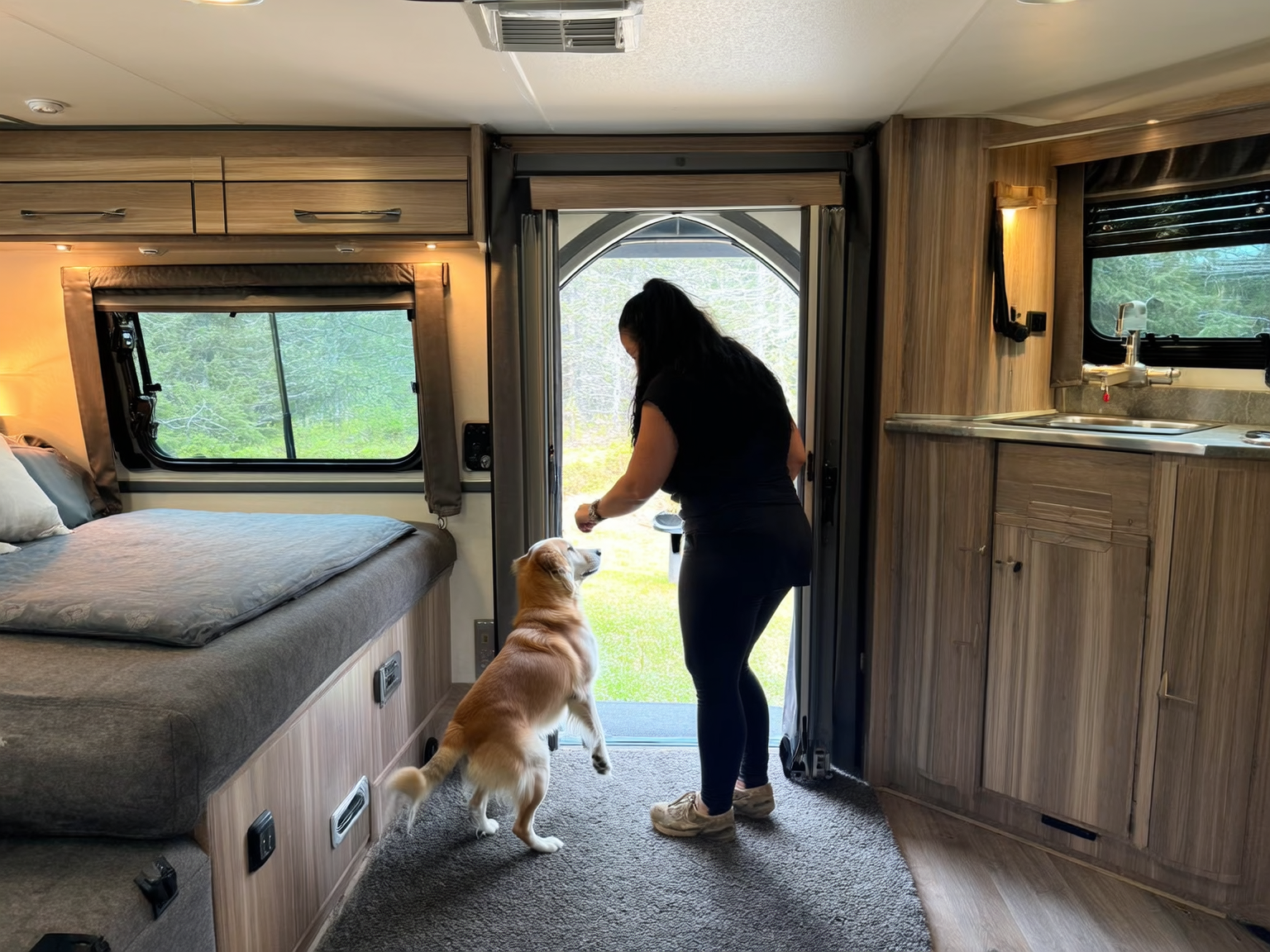
No one needs a strict luxury-house shoe ritual that collapses after two days. You need a rule that works in real life.
For most long-stay RVers, a simple shoe system is enough:
- Outdoor boots or work shoes stay by the door
- Indoor slippers or clean shoes stay inside
- Muddy shoes never cross the main living area
- Spare socks or slip-ons are easy to reach
Tiny bits of dirt and gravel are quickly ground into fibers, especially in narrow walkways and around the dinette or bed.
Vacuum Small Areas More Often, Not Rarely, and Aggressively
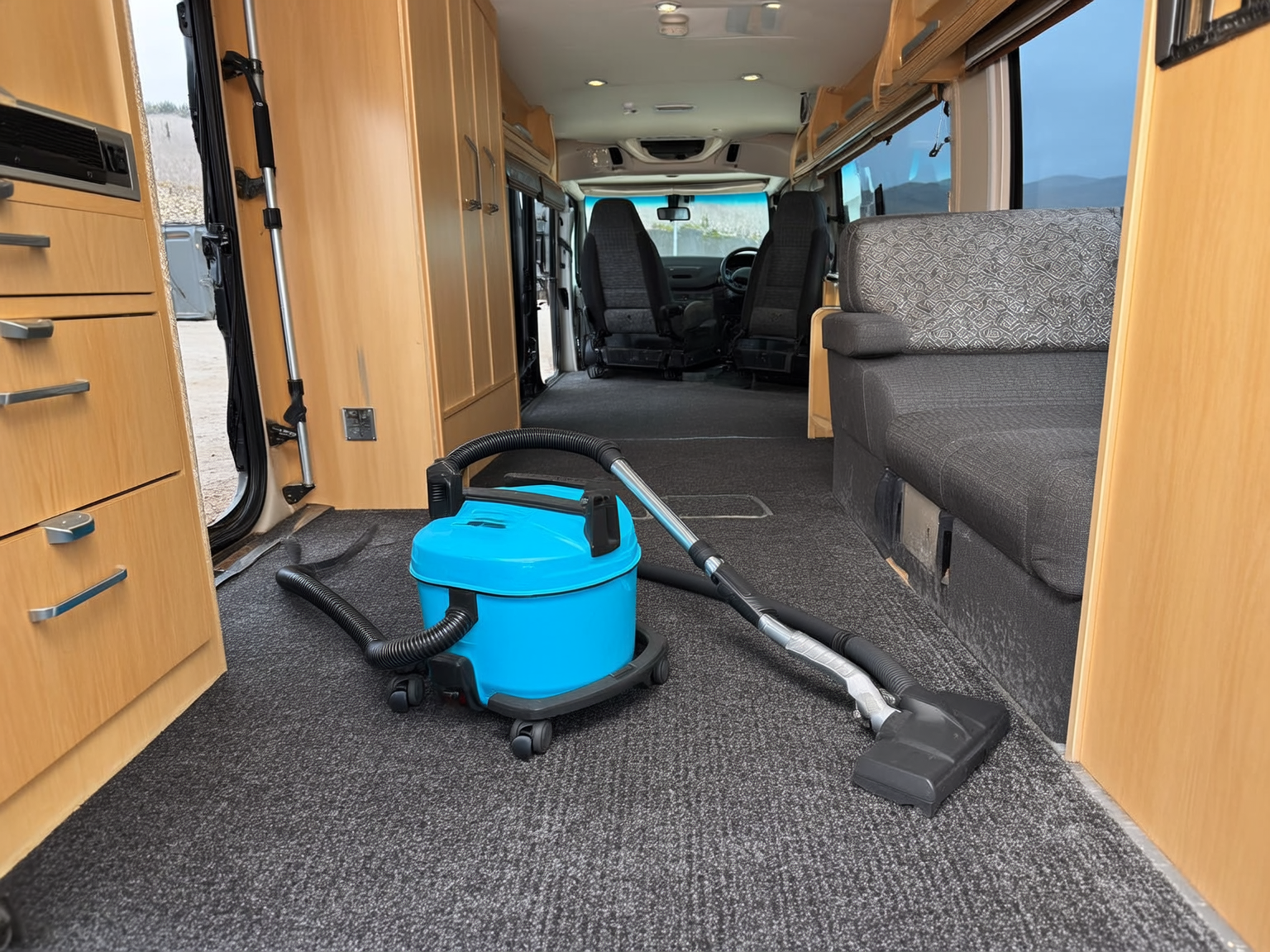
A common mistake is waiting until the carpet looks terrible, then trying to fix it in one big cleaning session.
That approach usually means debris gets ground deeper into the fibers, and cleanup starts to feel overwhelming.
A better move is lighter, more frequent passes.
In a full-time or long-stay setup, try this rhythm:
- Quick high-traffic vacuuming or sweeping every day or two
- A more complete carpet pass once or twice a week
- Spot treatment as soon as spills or mud happen
Small spaces reward consistency. Ten minutes of maintenance usually beats one exhausting deep-clean marathon.
Deal With Dust Before It Settles Into Everything
Casper wind and dry conditions can create a film of dust that seems to reappear no matter what you do. If you only focus on the carpet itself, you will keep fighting the same battle.
Dust management should include:
- Wiping hard surfaces regularly so dust is not kicked back onto the floor
- Keeping windows closed during especially windy periods
- Shaking out blankets, pet beds, and entry mats outdoors
- Storing loose gear instead of leaving it on the floor
Dust is not just a visual issue. In an RV, you’re constantly moving.
Handle Mud Fast, Especially in Shoulder Seasons
Mud is easier to control in the first five minutes than after it dries into the carpet.
If you come in with muddy shoes, wet paws, or gear covered in grime, do this quickly:
- Remove the dirtiest footwear at the door
- Blot wet spots instead of rubbing them deeper
- Use a towel dedicated to pet paws or entry cleanup
- Let the mats dry fully before placing them back down
- Vacuum-dry the residue once the area is no longer wet
Rubbing wet mud aggressively into the carpet usually makes the stain worse and drives grit deeper into the base.
A little discipline at the door saves a lot of frustration later.
Protect High-Traffic Zones Before They Wear Out
Not every patch of RV carpet gets equal use.
The areas most likely to break down are usually:
- The entry path
- The space between the kitchen and the dinette
- The bedside floor
- The area near the bathroom
- Any section where pets lie down repeatedly
Consider extra protection in those zones with washable runners, removable mats, or carpet-safe coverings.
This keeps the visible carpet cleaner and protects the fibers from constant wear.
If you need extra storage to keep bulky gear out of the living space, Rone’s storage options can help reduce clutter and keep the RV more functional during a longer stay.
Stay Ahead of Pet Hair and Paw Dirt
Pet-friendly RV life is great until the floor starts collecting fur, paw prints, and outdoor debris nonstop.
If you travel with pets, carpet care gets much easier when you focus on prevention:
- Keep a towel or paw cloth by the door
- Brush pets regularly so loose fur does not all end up inside
- Wash or shake pet bedding often
- Vacuum favorite pet zones more frequently than the rest of the RV
- Clean accidents immediately and fully
The biggest mistake pet owners make is underestimating how fast odor and dirt build up in a compact space.
Watch Moisture, Not Just Dirt
Dirty carpet is one problem. Damp carpet is worse.
Moisture can come from:
- Wet shoes
- Rain jackets left on the floor
- Damp towels
- Pet water spills
- Condensation near doors or windows
- Plumbing drips that go unnoticed for too long
If the carpet stays damp, you are not just dealing with stains. You are creating odor risk and potentially mold issues in a small enclosed space.
Check around entryways, under pet bowls, near the bathroom, and at the edges of slides. If something feels damp, deal with it right away.
Inside the RV, moisture discipline is just as important for protecting your living environment.
Use the Right Spot-Cleaning Habits
RV carpet does not need harsh panic chemistry every time something spills.
A good spot-cleaning routine looks like this:
- Blot first, do not scrub immediately
- Remove solids or loose dirt before adding moisture
- Use a mild carpet-safe cleaner appropriate for your material
- Test products in an inconspicuous area if you are unsure
- Dry the area thoroughly after cleaning
The goal is to lift the mess without soaking the pad or spreading the stain.
This is especially important in RVs because padding and subfloor materials can be less forgiving than in a larger house.
Reduce Clutter So the Floor Can Actually Be Cleaned
A surprisingly big part of carpet maintenance is clutter control.
When bags, tools, laundry, cords, and random gear live on the floor, dirt gets trapped around them, and vacuuming gets delayed.
Long-stay RVers do much better when every category of daily-use item has a landing zone. If gear has a place, the carpet stays accessible and gets cleaned more often.
Build a Weekly Reset Routine
The easiest way to keep carpet clean over a long stay is to stop relying on motivation. Use a repeatable reset.
A simple weekly floor reset might include:
- Shake out the outdoor and indoor mats
- Vacuum high-traffic paths first
- Spot-clean visible marks
- Check for damp corners or hidden spills
- Clear clutter from the floor
- Refresh pet areas
This does not have to be elaborate. It just needs to happen consistently enough that the mess never fully wins.
If you are staying for work or long-term living, contact Rone’s RV Park to reserve a practical full-hookup base where routines like this are easier to maintain.
Keep the Bigger Picture in Mind
A clean carpet is not only about appearance. It supports the overall feel of the RV.
When the floors stay under control:
- The space feels calmer
- Daily cleanup takes less energy
- Odors are easier to prevent
- The RV feels more like a home than a temporary mess zone
That matters a lot to workers, full-time RVers, and anyone using Casper as a real base rather than a short scenic stop.
FAQ: How to Keep RV Carpet Clean During a Long Wyoming Stay
How often should I vacuum the RV carpet during a long stay?
For most long-stay RVers, high-traffic areas should be vacuumed every day or two, with a fuller pass once or twice a week, depending on pets, work gear, and weather.
What is the best way to keep mud off RV carpet?
Use indoor and outdoor mats, remove shoes at the door, blot up mud immediately, and clean the area before it dries into the fibers.
Why does RV carpet get dirtier faster than house carpet?
RV carpet has less square footage, tighter traffic patterns, closer entry points, and more concentrated wear. Dirt builds up faster because every step matters more.
Where should I stay in Casper if I need a clean, practical RV home base?
A full-hookup park with spacious sites makes long-term routines easier. Contact Rone’s RV Park if you need a reliable setup in Casper for a longer stay.
Final Take
If you want to keep RV carpet clean during a long stay in Wyoming, focus less on deep-cleaning heroics and more on repeatable daily systems. Control what comes through the door, protect high-traffic zones, handle mud and moisture quickly, and keep the floor accessible enough to clean often. That is what makes a long-stay RV feel lighter, calmer, and more livable.
Planning a longer Casper stay while living in your RV? Stop by Rone’s RV Park for a comfortable full-hookup base that supports real day-to-day RV life.