
Storing your RV should preserve it. Instead, many RVers return to find water damage, dead batteries, rodent infestations, or worse — an empty spot where their RV used to be.
Long-term storage requires more than parking and walking away. Done right, your RV emerges from storage ready to roll. Done wrong, you face expensive repairs or total loss.
This guide covers complete RV storage protection: security that deters theft, weatherproofing that prevents damage, and maintenance that keeps systems healthy during dormancy.
Pre-Storage Security Setup

Physical Security Essentials
Entry Points:
- Lock all doors with deadbolts (not just latches)
- Add a security bar to the main entry door
- Lock all emergency exits from inside
- Consider blocking slide-out openings
Compartments:
- Replace all CH751 universal locks
- Lock every storage compartment
- Use quality padlocks on external bays
- Lock utility connections (propane, shore power access)
Hitching Security (Trailers/Fifth Wheels):
- Install coupler lock (blocks ball socket)
- Add kingpin lock (fifth wheels)
- Consider tongue/A-frame lock
- Lock receiver when not attached
Wheel Security:
- Wheel locks or boots on at least two wheels
- Opposite corners for maximum effect
- Bright colors increase visibility (deterrent)
- Quality locks resist cutting/grinding
Electronic Security
GPS Tracking:
- Install a hidden GPS tracker
- Verify cellular coverage at the storage location
- Activate geofencing (alert if RV moves)
- Consider a hardwired installation for long storage
- Test before leaving
Alarm Systems:
- Ensure battery backup for extended storage
- Enable away/storage mode if available
- Verify the notification system works
- Consider cellular-based (WiFi may not be available)
Cameras:
- Internal cameras can document an intrusion
- Battery life considerations
- May be overkill for secure facilities
- Trail camera option for periodic documentation
Storage Location Security
Facility Requirements:
- Fenced perimeter with controlled access
- Security cameras with recording
- Adequate lighting throughout
- Regular staff presence
- Good reputation in the RV community
Questions for Facility:
- How is access controlled?
- What’s the camera coverage?
- Who has access after hours?
- What’s the theft history?
- What does their insurance cover?
Your Responsibilities:
- Understand what you’re responsible for
- Maintain your own insurance
- Don’t rely solely on facility security
- Visit periodically if possible
Pre-Storage Maintenance
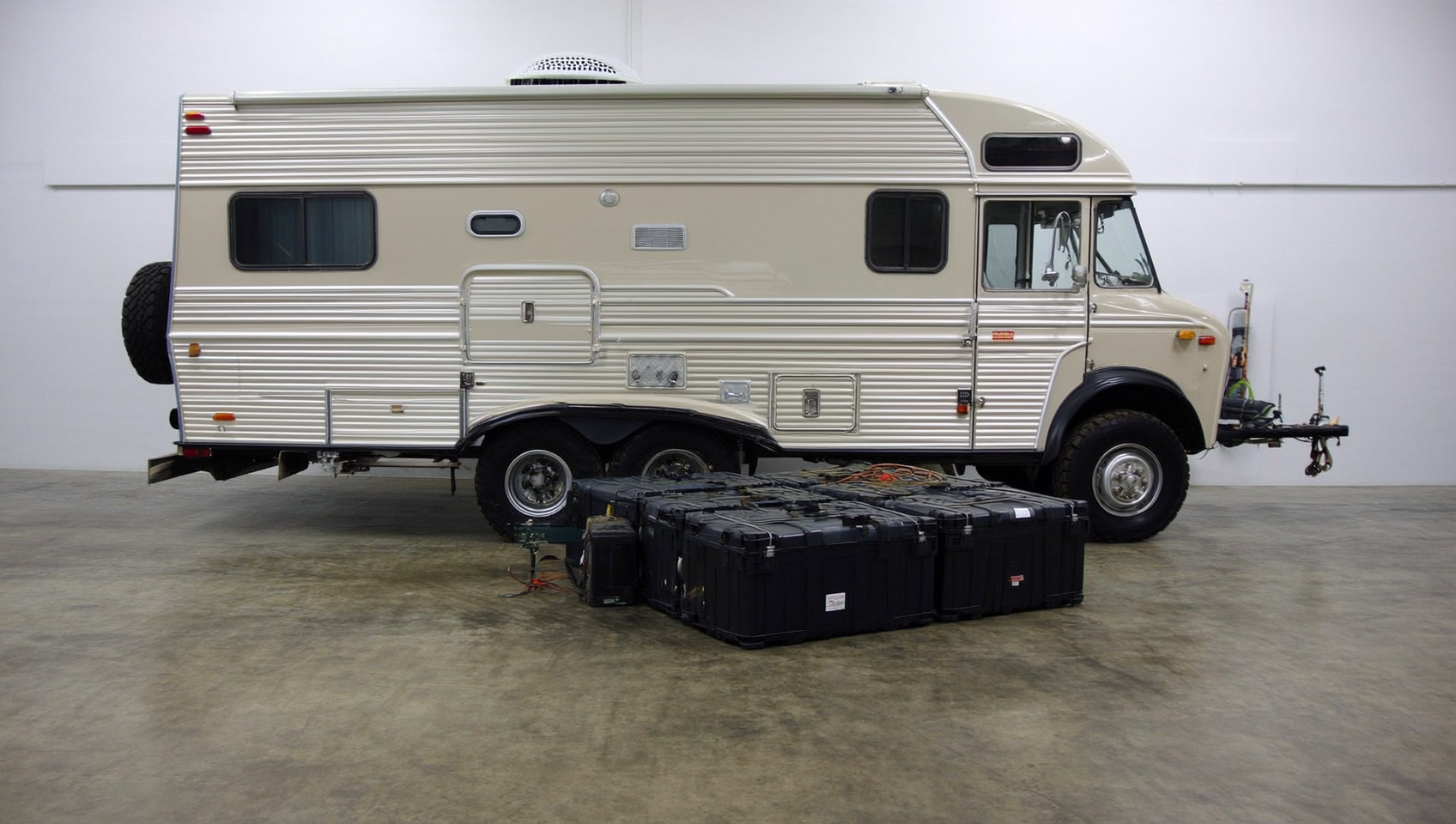
Engine and Generator (Motorhomes)
Engine Prep:
- Change oil and filter (old oil contains acids)
- Top off all fluids (coolant, transmission, etc.)
- Add fuel stabilizer to a full tank
- Run the engine to circulate stabilized fuel
- Consider diesel anti-gel for winter
Generator:
- Run with stabilized fuel for 15+ minutes
- Change oil
- Fill with fresh stabilized fuel
- Cover exhaust opening (rodent prevention)
- Document run time for next service
Battery Care
Best Practice — Remove Batteries:
- Store indoors above freezing
- Place on wood (not concrete)
- Connect to the maintainer/tender
- Check monthly and top off the charge
- Label connections for reinstallation
If Leaving Installed:
- Disconnect negative cables
- Fully charge before storage
- Check periodically if accessible
- Expect a shorter lifespan
Battery Math:
- Fully charged battery: Freezes at -76°F
- 50% charged battery: Freezes at -10°F
- Discharged battery: Freezes at 32°F
Water System Winterization
Complete Drainage:
1. Open all faucets (hot and cold)
2. Drain the fresh water tank
3. Drain water heater (bypass first, then drain)
4. Open low-point drains
5. Flush the toilet until empty
6. Run the pump dry
7. Leave faucets open
Antifreeze Protection:
1. Bypass water heater
2. Add RV antifreeze through the water pump
3. Run through all faucets until pink
4. Pour into all drains (P-trap protection)
5. Add to the toilet bowl and holding tanks
Use only non-toxic RV/Marine antifreeze.
Holding Tanks
- Empty black and gray tanks completely
- Flush thoroughly
- Add RV antifreeze to each tank
- Leave dump valves closed (seals can freeze open)
Propane System
- Turn off at the tank
- Run appliances briefly to empty lines
- Consider removing tanks (theft prevention)
- Cover connections (moisture prevention)
- Check for leaks before next use
Weatherproofing for Storage
Roof Protection
Inspection Before Storage:
- Clean the roof thoroughly
- Check all sealants (reseal if needed)
- Inspect around every vent, AC, antenna
- Look for soft spots or damage
- Apply UV protectant (EPDM roofs)
During Storage:
- Cover if possible (prevents UV, snow, debris)
- Clear snow after storms (if accessible)
- Check for ice dam formation
- Consider a tarp over the roof vents
Exterior Sealing
Check All Seams:
- Sidewall-to-roof transition
- Window frames
- Door frames
- Slide-out seals
- Compartment seals
- Around lights and accessories
Treatment:
- Reseal any questionable areas
- Apply seal conditioner to rubber seals
- Address cracks before they become leaks
Cover Considerations
Full RV Covers:
- Protect from UV, rain, snow, debris
- Must be breathable (moisture prevention)
- Proper fit prevents flapping (damage)
- Quality covers the last multiple seasons
Pros:
- Excellent protection
- Hides contents
- Reduces inspection frequency
Cons:
- Moisture can be trapped if not breathable
- Wind damage if poorly secured
- Installation can be challenging
Alternatives:
- Covered storage (no cover needed)
- Roof-only cover (less expensive)
- Breathable tarp over vulnerable areas
Tire Protection
Before Storage:
- Inflate to maximum sidewall pressure
- Clean tires thoroughly
- Apply UV protectant
During Storage:
- Cover tires (UV protection)
- Place on plywood or mats (not bare ground)
- Consider jack stands (prevents flat spots)
- Move periodically if possible (not always practical)
Slide-Out Storage
Fully Retract:
- Retract all slide-outs completely
- Clean slide seals before retracting
- Apply seal conditioner
- Consider slide covers for protection
Do NOT Store Extended:
- Seals exposed to the weather
- Roof becomes irregular (pooling)
- Entry points for rodents and insects
- Structural stress over time
Pest Prevention
Rodent Exclusion
Seal Entry Points:
- Any hole larger than 1/4 inch
- Gaps around plumbing penetrations
- Slide-out mechanisms
- Fresh air intakes
- Furnace and appliance vents
Sealing Materials:
- Steel wool (rodents can’t chew through)
- Copper mesh (rust-resistant)
- Expanding foam (combine with steel wool)
- Wire mesh for larger openings
Deterrents
Place Throughout RV:
- Fresh Cab or similar commercial products
- Peppermint oil on cotton balls
- Dryer sheets in drawers and compartments
- Irish Spring soap (folk remedy)
- Mothballs (toxic — use with caution)
Reapply Monthly if Possible
Traps
Set Multiple Traps:
- Snap traps in likely entry areas
- Check periodically during storage
- Dispose of catches properly
- Reset as needed
Avoid Poison:
- Creates a dead animal odor
- Can attract other pests
- Difficult to locate bodies
- Not recommended for enclosed spaces
Insect Prevention
Before Storage:
- Clean thoroughly (remove food attractants)
- Seal all food or remove it
- Clean crumbs from every surface
- Check screens and seal gaps
During Storage:
- Consider bug bombs before sealing
- Ant traps in prone areas
- Check during visits
Interior Storage Preparation
Food Removal
Remove Everything Edible:
- All food (including canned)
- Pet food
- Snacks and candy
- Even sealed items (rodents smell them)
Clean After Removal:
- Wipe all surfaces
- Vacuum crumbs from everywhere
- Clean under cushions and in corners
Appliance Prep
Refrigerator:
- Empty completely
- Clean thoroughly
- Leave the door propped open
- Deodorizer inside (baking soda)
Other Appliances:
- Clean microwave, oven, stove
- Empty and clean coffee maker
- Ensure nothing can attract pests
Climate Control
If Heated Storage:
- Set thermostat to 50°F minimum
- Arrange propane refills if needed
- Ensure ventilation
If Unheated:
- Complete winterization
- Open interior doors (air circulation)
- Consider desiccant packets (moisture control)
- Slightly crack windows if safe (ventilation)
Furniture and Fabrics
Prevent Moisture Damage:
- Lift cushions/stand on edge (air circulation)
- Open cabinet doors
- Don’t store fabric items compressed
- Consider moisture absorbers
Documentation Before Storage
Photo Documentation
Photograph:
- All exterior angles
- Each interior room
- Any existing damage
- Security devices installed
- Condition of the roof and seals
- Storage setup (how you left it)
Purpose:
- Insurance documentation
- Before/after comparison
- Evidence of theft occurring
- Maintenance reference
Create Inventory
Document:
- All items left in the RV
- Serial numbers of valuable items
- Condition of major systems
- Recent maintenance performed
- Date of storage and expected retrieval
Store Inventory:
- Not in the RV
- Cloud storage recommended
- Share with a family member
- Accessible if needed for claims
Checklist Verification
Confirm Before Walking Away:
- [ ] All security measures in place
- [ ] Water system winterized
- [ ] Engine/generator prepared
- [ ] Batteries handled
- [ ] Holding tanks treated
- [ ] Propane system secured
- [ ] Roof and exterior sealed
- [ ] Tires protected
- [ ] Rodent prevention in place
- [ ] Food removed
- [ ] Appliances prepared
- [ ] Photos taken
- [ ] Inventory documented
During Storage Checks
Monthly (If Possible)
Quick Check:
- Walk around the exterior
- Look for visible damage
- Check for rodent activity
- Verify security intact
- Clear debris from the roof/vents
Quarterly (Minimum)
More Thorough:
- Everything in monthly, plus:
- Start and run the engine (motorhomes)
- Run the generator briefly
- Check battery status
- Inspect the interior for moisture
- Reset traps and deterrents
- Take updated photos
After Severe Weather
Check Immediately For:
- Hail damage
- Wind damage to covers/tarps
- Tree/branch damage
- Flooding or water intrusion
- Any security breaches
De-Storage Checklist
Before Using RV
Exterior:
- [ ] Remove covers
- [ ] Inspect for damage
- [ ] Check roof and seals
- [ ] Inspect tires (pressure, condition)
- [ ] Check under RV
Water System:
- [ ] Flush antifreeze thoroughly
- [ ] Sanitize the fresh water system
- [ ] Check for leaks
- [ ] Test water heater
- [ ] Test pump and faucets
Mechanical:
- [ ] Reinstall batteries
- [ ] Check all fluid levels
- [ ] Start engine, let it run
- [ ] Test brakes
- [ ] Check lights
Interior:
- [ ] Inspect for rodent activity
- [ ] Check for moisture damage
- [ ] Test all appliances
- [ ] Run AC and heat
- [ ] Check detectors (smoke, CO)
Systems:
- [ ] Test slide-outs
- [ ] Check leveling system
- [ ] Test awning
- [ ] Verify LP system (leak check)
- [ ] Test all electronics
Storage Cost Analysis
Wyoming Storage Options
Outdoor Uncovered: $50-100/month
- Pros: Cheapest
- Cons: Full weather exposure
Outdoor Covered: $100-200/month
- Pros: Roof protection
- Cons: Still exposed to elements
Indoor Unheated: $200-400/month
- Pros: Full weather protection
- Cons: Temperature extremes still occur
Indoor Heated: $400-800/month
- Pros: Climate-controlled
- Cons: Expensive
Cost-Benefit Calculation
For a $50,000 RV stored for 5 months:
Outdoor Uncovered: $375 total + winterization + higher risk
Indoor Heated: $2,500 total + minimal prep + lowest risk
Consider:
- RV value (more valuable = more protection)
- Climate severity
- Storage duration
- Your risk tolerance
Prevention vs. Repair Costs
Storage Preparation: $100-300 in supplies/time
Potential Damage Costs:
- Water damage repair: $2,000-15,000
- Rodent damage: $500-5,000
- Theft loss: Total value
- Tire damage: $600-2,000
Investment in protection almost always saves money.
Final Thoughts
Long-term RV storage requires active preparation, not passive parking. Every element of this checklist exists because RVers have lost money, time, and irreplaceable possessions by skipping it.
The time you invest before storage pays dividends when you retrieve your RV — ready for adventure instead of ready for repairs.
Document everything, secure everything, and check periodically. Your future self will thank you.
Need a secure place to store your RV when you’re not using it? Rone’s RV Park in Casper offers safe, accessible storage options for guests. Contact us about extended stay and storage arrangements.